October 28, 2026
Getting the Most from Custom Workwear Printing for Your Team
By @customworkwearprintingshop
When you run a crew that works outdoors, on a production floor, or in any job where clothes take a beating, the shirts and jackets your people wear matter more than you might think. I have spent years in the print shop trenches watching what holds up and what does not. The difference between a uniform that fades after three washes and one that still looks sharp a year later comes down to the choices you make before you even place an order. That is where custom workwear printing Custom Shirt Printing really earns its keep.
Most people assume all screen printing is the same. It is not. The ink, the mesh count, the cure temperature, and the garment itself all play a role. If you are buying for a construction crew or a restaurant staff, you need prints that survive sweat, sun, and commercial laundering. That means starting with the right fabric and the right print method for the job.
Fabric First
Cotton feels great and breathes well, but 100% cotton tees shrink and lose shape faster than blends. For workwear, a cotton-poly blend or a performance fabric with moisture-wicking properties usually makes more sense. Polyester holds color better and resists shrinking. The trade-off is that polyester can feel less breathable in direct heat, and some inks bond differently to synthetic fibers. A good print shop will test a sample before running a full order. That is a sign they know what they are doing.
I have seen too many companies order cheap blanks to save a few dollars per shirt, only to have the prints crack or peel after a few months. The labor of reprinting and redistributing uniforms costs far more than the savings on the garment. Spend the extra dollar or two on a quality blank. Your team will wear them more often, and your logo will stay visible longer.
Print Methods for Workwear
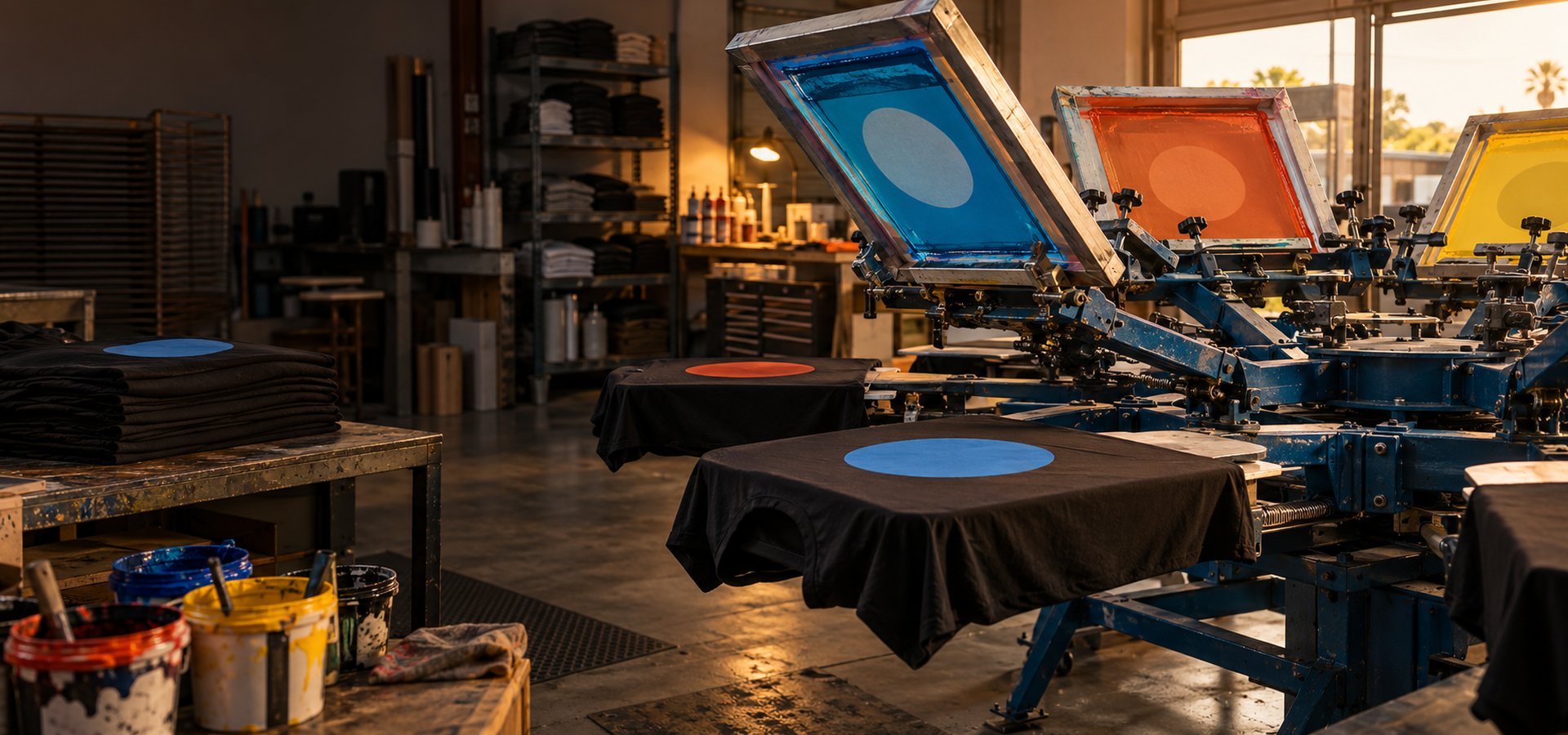
Screen printing remains the standard for high-volume orders. It gives you vibrant colors, good opacity on dark shirts, and a durable finish when done right. For workwear, you want a thicker ink deposit, often achieved with a higher mesh count and multiple strokes. That creates a print that can handle abrasion from tool belts, backpack straps, and washing machines.
Direct-to-film (DTF) transfers have become popular in the last few years, and for good reason. DTF allows full-color prints without the setup cost of screen printing, and it bonds well to both cotton and polyester. The print sits on top of the fabric rather than soaking in, which gives a soft hand but still holds up to wear. For smaller orders or designs with many colors, DTF can be a smarter choice than screen printing.
Embroidery works best for hats, jackets, and polos where you want a raised, professional look. It does not fade, and it resists peeling better than any ink. The downside is that embroidery is thicker and can feel scratchy against the skin on hot days. It also adds cost per piece. For a logo on a cap or a left chest on a dress shirt, embroidery is hard to beat. For a full back design on a tee, stick with screen printing or DTF.
When you combine these methods with the right garment, you get results that last. That is the core of custom workwear printing Custom Shirt Printing. It is not about one magic technique. It is about matching the method to the job and the garment.
Design Considerations for Workwear
A logo that looks great on a computer screen might not translate well to a shirt. Small text, fine lines, and complex gradients cause problems in screen printing and can look muddy in DTF. For workwear, simplify. Use bold fonts, high-contrast colors, and a limited palette. A two-color design on a contrasting background reads clearly from a distance and prints cleanly every time.
Placement matters too. A left-chest logo is classic and works under a harness or a vest. A full back print makes a statement but can get covered by a tool belt or a backpack. Think about how your team actually moves and what parts of the shirt show. Some shops will let you order different placements for different roles within the same company. That flexibility is worth asking about.

Working with a Print Shop
Not every print shop has experience with workwear. Ask about their garment recommendations and whether they offer samples. A shop that pushes back on your choice of fabric or print method might actually be saving you from a bad outcome. Listen to them.
Here are a few questions to ask before you commit:
- What blanks do you stock for workwear, and can you order other brands?
- Do you test prints for washability and abrasion?
- What is your turnaround time for an order of 50 to 200 pieces?
- Can you do mixed sizes without a price penalty?
- Do you offer free design help to tweak my artwork for printing?
A family-owned shop with in-house production, like the one behind custom workwear printing Custom Shirt Printing, will usually give you straight answers. They are not outsourcing the work to a third party, so they control the quality from start to finish. That matters when you need consistency across a large order or a tight deadline.
Cost vs. Value
Printing workwear is not the cheapest line item in your budget, but it is one of the most visible. Every time a customer sees your logo on a clean, well-fitted shirt, they get a message about your professionalism. Every time a shirt fades or cracks, they get the opposite message. Spending a little more on quality blanks and proper printing pays for itself in brand equity and team morale.
I have seen crews that refused to wear their uniforms because the shirts were uncomfortable or the prints itched. That defeats the purpose entirely. A comfortable shirt that fits well and shows your logo cleanly is a piece of marketing that works for you every day, without any effort. That is the return on investment you should aim for.
Maintenance and Longevity
Once you have good uniforms, take care of them. Wash inside out in cold water, skip the bleach, and tumble dry on low. Heat is the enemy of screen prints and DTF transfers. If you run a commercial laundry, talk to your provider about the wash cycle settings. A little care on the back end extends the life of your prints significantly.
Final Thoughts
Custom workwear printing is an investment in your team and your brand. The choices you make at the start, from fabric to print method to design, determine how long that investment lasts. Work with a shop that understands the demands of real jobs, not just T-shirt cannon giveaways. A good print partner will guide you through the process and deliver shirts your people actually want to wear.
 Facebook
 Instagram
❧